

PRESS RELEASE
Kazakhstan Becomes the Third Country in the World to Submit Its Second Biennial Transparency Report (BTR2)
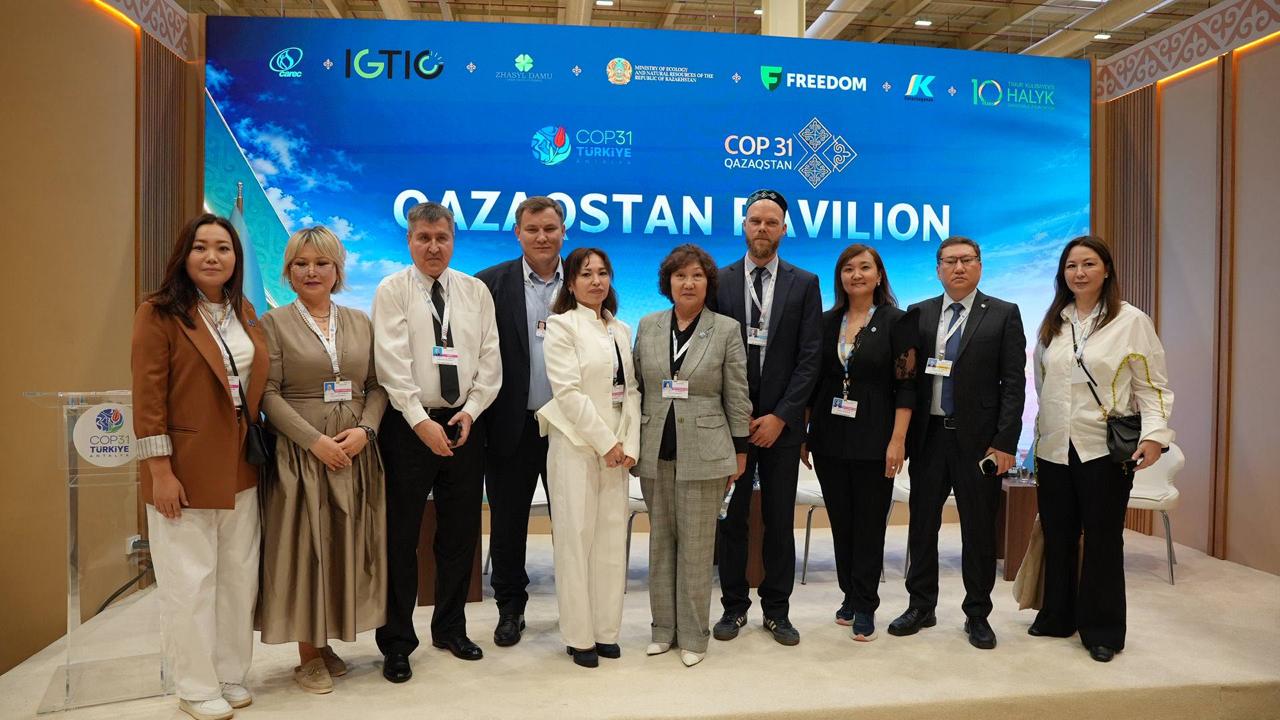
Kazakhstan is launching a new national project to strengthen climate transparency and advance its climate reporting system under the Paris Agreement. The launch of the initiative, along with the outcomes of preparing the Second Biennial Transparency Report (BTR2) and the Ninth National Communication, was announced during a thematic session at the National Pavilion of the Republic of Kazakhstan at COP31.
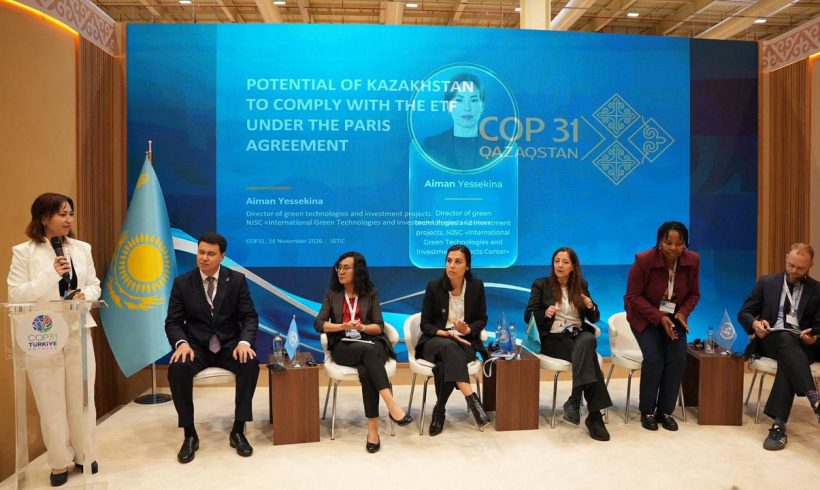
The session, titled “Strengthening Climate Transparency (ETF): The Experience of Kazakhstan and Central Asia under CBIT and BTR,” brought together representatives of government agencies, international organizations, and experts to discuss the development of national climate reporting, monitoring, and data verification systems.
The event was organized by the Ministry of Ecology and Natural Resources of the Republic of Kazakhstan with the participation of the International Green Technologies and Investment Projects Center (IGTIC), the Food and Agriculture Organization of the United Nations (FAO), the United Nations Development Programme in Kazakhstan (UNDP), and Zhasyl Damu JSC.
The centerpiece of the session was an official document exchange ceremony between the Ministry of Ecology and Natural Resources of the Republic of Kazakhstan and FAO, symbolizing the launch of the national CBIT project “Strengthening Kazakhstan’s Capacity to Meet the ETF Requirements under the Paris Agreement.”
The project aims to build the country’s institutional and technical capacity, improve climate data collection and analysis mechanisms, and enhance Kazakhstan’s readiness to meet the requirements of the Enhanced Transparency Framework (ETF).
During the event, the results of Kazakhstan’s work on preparing climate reporting were also presented. Particular attention was given to the country’s experience—from submitting its First Biennial Transparency Report at COP29 in Baku and its review by international UNFCCC experts to taking stock of the outcomes at the FMCP session during COP30 in Brazil.
In addition, participants were presented with the Combined Second Biennial Transparency Report (BTR2) and Ninth National Communication of the Republic of Kazakhstan, prepared and submitted ahead of the start of COP31.
During the discussion, experts examined the transition from the first BTR preparation cycle to the establishment of sustainable national transparency systems. Key priorities include improving the quality of climate data, strengthening interagency coordination, digitalizing monitoring and reporting processes, and practically applying the findings to implement Nationally Determined Contributions (NDCs).
A dedicated segment of the discussion focused on prospects for regional cooperation. Representatives of Central Asian countries exchanged experiences and approaches to building Monitoring, Reporting, and Verification (MRV) systems, identified shared challenges and needs, and explored opportunities for joint efforts in preparing subsequent climate reports.
Developing the climate transparency system is a critical prerequisite for enhancing the effectiveness of climate policy, strengthening the trust of international partners, and attracting climate finance. The launch of the new CBIT project will enable Kazakhstan to consistently advance its national climate reporting infrastructure and deepen cooperation with countries across the region.
For reference:
The organization of the Kazakhstan Pavilion at COP31 is sponsored by Freedom Holding Corp. through the Freedom Shapagat Corporate Foundation.
International Green Technologies and Investment Projects Center NJSC (IGTIC) is a subordinate organization of the Ministry of Ecology and Natural Resources of the Republic of Kazakhstan dedicated to promoting green technologies, attracting investments into environmental projects, and advancing international cooperation in sustainable development.
Click here to change this text